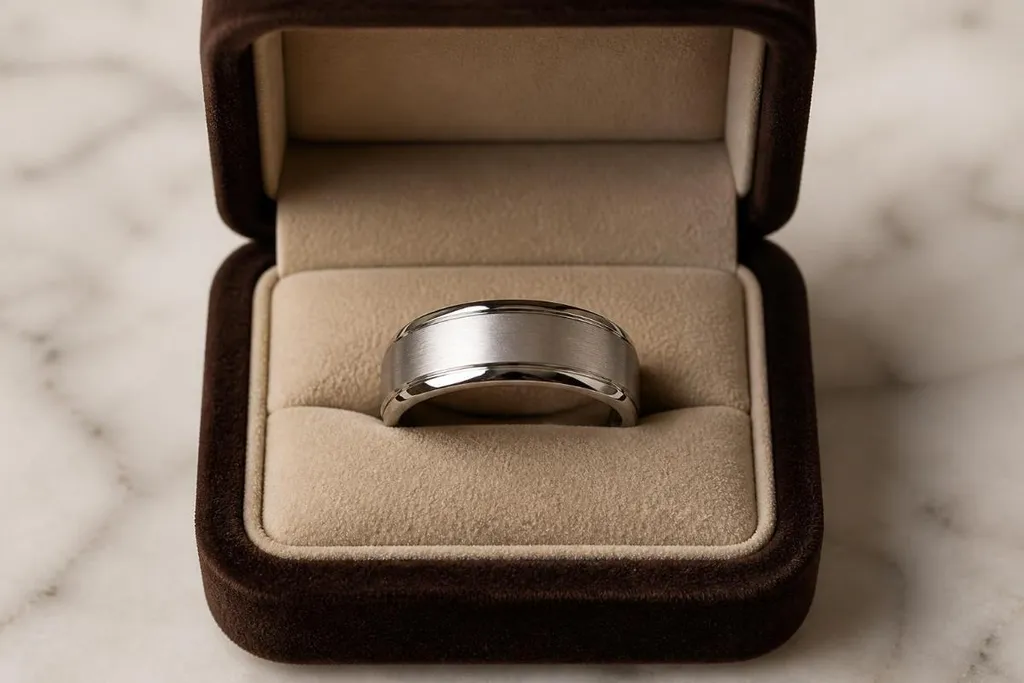
A men’s wedding ring can be understated without being anonymous. Small changes to profile, edge treatment and finish can completely alter how a plain band looks on the hand. A bevelled-edge design is a strong example: rather than following one continuous curved or flat surface, the edges are deliberately angled, adding definition and architectural detail. Crafted in platinum, the result feels substantial, contemporary and refined without relying on gemstones or elaborate decoration.
For someone drawn to this approach, the option to order the platinum bevelled edge mens wedding ring from Lily Arkwright demonstrates how a distinctive profile can give a plain platinum band its own identity. The interest comes from proportion and metalwork, making this style particularly suitable for someone who wants a wedding ring with visible character but prefers a restrained aesthetic for everyday wear.
What a Bevelled Edge Adds to a Plain Band
On a conventional plain wedding ring, the outer surface may be predominantly flat, rounded or gently domed. A bevelled profile introduces angled sections along the edges, creating additional lines that catch light differently from the main surface.
That sounds like a minor detail, but it can have a considerable visual effect. The bevels frame the centre of the band and give the ring a more structured appearance. Viewed from different angles, the transitions between surfaces become part of the design.
This makes a bevelled ring an appealing middle ground between a completely plain band and a heavily patterned style. It still coordinates easily with watches, bracelets and other jewellery, but it does not disappear visually on the hand.
For someone who rarely wears jewellery, this restraint can be particularly useful. The ring feels distinctive enough to mark its significance without requiring a dramatic change in personal style.
Why Platinum Works With a Structured Profile
Platinum is especially effective in designs where the shape of the metal is the primary decorative feature.
Its naturally white appearance creates a clean, neutral look, allowing the geometry of the bevelled edges to remain easy to appreciate. Different surfaces catch light at slightly different angles, helping define the profile even without contrasting colours or additional materials.
Platinum also has a reassuring density on the hand. For many wearers, that physical substance contributes to the sense that the wedding ring is a permanent piece rather than an occasional accessory.
Durability is another practical consideration for a ring expected to be worn frequently. Platinum is valued for its toughness, although it will still acquire surface marks through everyday use. Over time, these fine marks develop into the characteristic patina associated with worn platinum.
Some people prefer that softer finish, while others choose occasional professional polishing to return the ring to a brighter appearance.
Choosing the Right Width and Overall Proportion
Band width affects both appearance and comfort, particularly with a defined profile such as a bevelled edge.
A narrower ring tends to look more discreet and may suit someone with smaller hands or shorter fingers. It can also feel like an easier transition for a wearer who is not accustomed to having a ring on their hand throughout the day.
A broader band creates greater presence and gives the bevelled detailing more visible surface area. On larger hands, additional width can also produce a more balanced proportion.
There is no universal ideal. The best approach is to consider how the band looks relative to the finger rather than choosing width solely according to fashion.
Thickness matters as well. A ring can look relatively streamlined from above yet still feel substantial depending on its depth and internal profile. Trying different proportions helps establish what feels natural during normal hand movement.
Everyday Wear, Comfort and Styling
A wedding ring is likely to be worn far more often than most other jewellery, so comfort deserves equal attention to appearance.
The inside profile, band width and overall weight influence how noticeable the ring feels during the day. Someone unfamiliar with jewellery may initially prefer a slightly narrower proportion, while an experienced ring wearer might appreciate greater substance.
A bevelled platinum band is also straightforward to style. Its cool tone coordinates naturally with stainless-steel watches, silver-toned accessories and other white-metal jewellery. Because the design relies on geometry rather than decorative motifs, it can work equally well with formal tailoring and casual clothing.
Practical care remains simple. Removing the ring during heavy manual work can reduce unnecessary knocks and deep scratches, while routine cleaning helps remove everyday residue. Periodic professional attention can address the finish if desired.
Final Thought
A bevelled-edge platinum wedding ring demonstrates how much character can come from a carefully considered profile. The angled edges introduce structure and definition, while platinum provides a naturally white appearance, satisfying weight and durability suited to long-term wear.
For someone who wants a modern masculine wedding band without gemstones or excessive detailing, the combination offers a compelling balance. It remains recognisably classic, yet the architectural edge treatment gives it enough individuality to feel deliberate rather than simply plain.